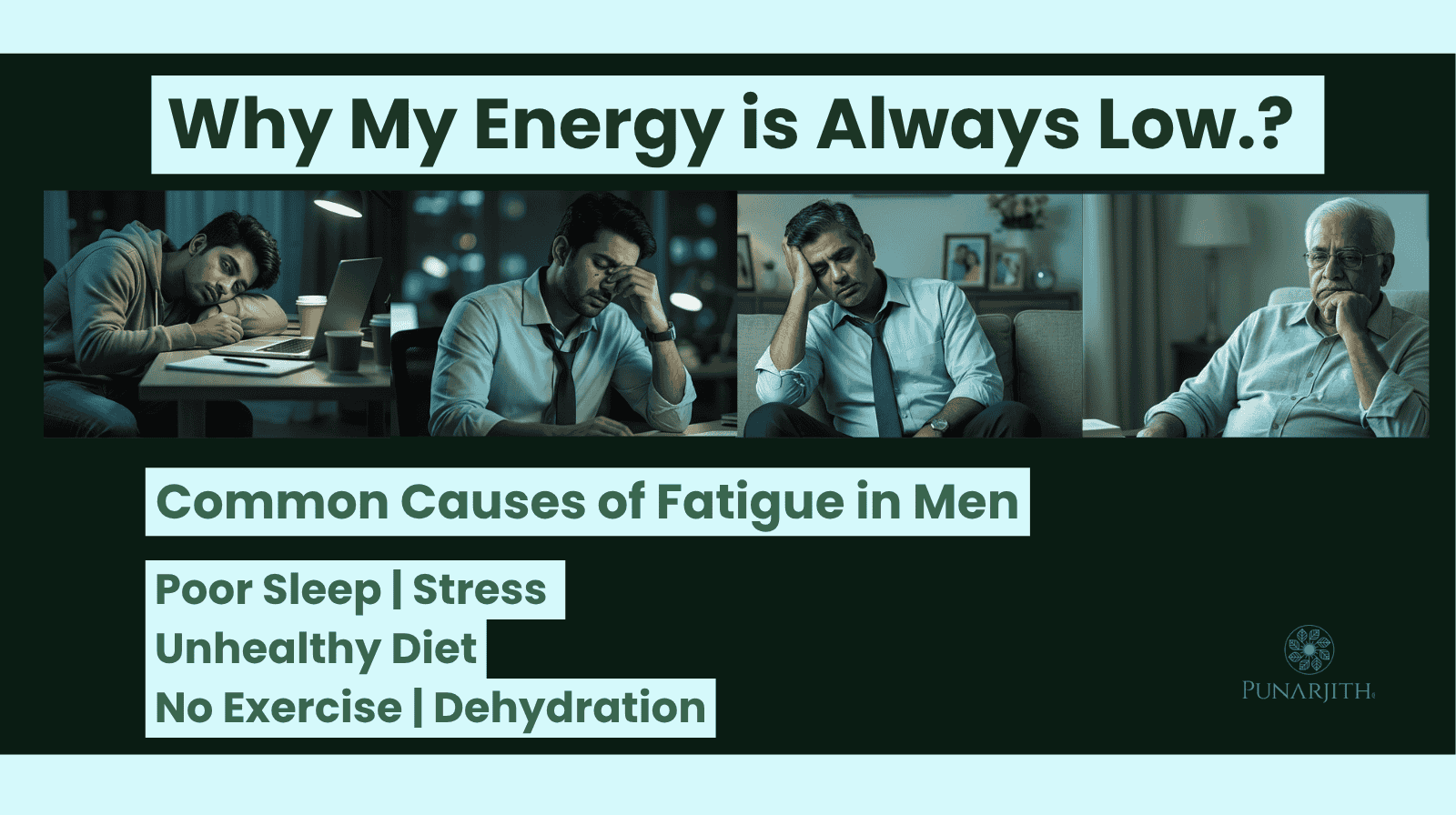
Low energy in men is a common issue today. Many men feel tired, weak, or mentally drained even without heavy work. This is not just about lack of rest—it can be due to multiple physical, mental, and lifestyle factors.
Understanding the reasons behind low energy can help you take the right steps to improve your health and daily performance.
Causes of Fatigue in Men
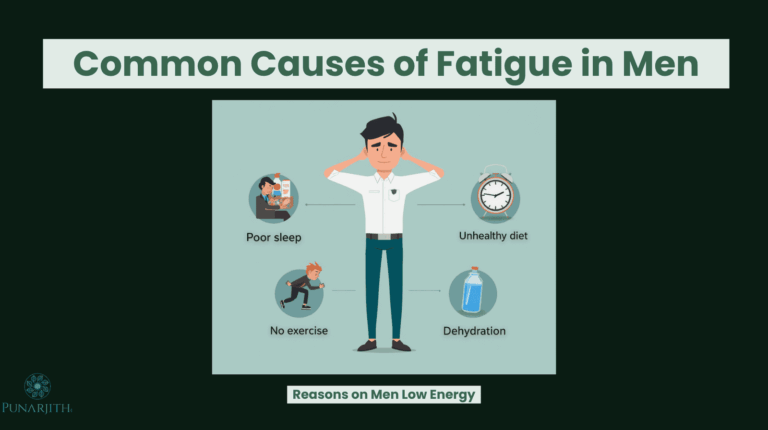
1. The Quality Gap: Poor Sleep
It’s not just about how many hours you spend in bed, but what happens during them.
Sleep Apnea: Men are statistically more likely to suffer from obstructive sleep apnea, where breathing repeatedly stops and starts, preventing deep, restorative REM sleep.
The Blue Light Trap: Late-night scrolling or gaming suppresses melatonin, making your brain think it’s daytime even when your body is exhausted.
2. The Sedentary Paradox: Lack of Activity
It sounds counterintuitive, but not moving makes you more tired.
Deconditioning: When you’re inactive, your heart and lungs become less efficient at delivering oxygen to your tissues.
The “Desk Job” Drain: Mental fatigue from sitting all day can trick the brain into thinking the body is physically exhausted, leading to a cycle of perpetual lethargy.
3. Fueling the Fire: Unhealthy Diet
Food is your body’s literal gasoline. If you’re putting low-grade fuel in the tank, the engine is going to sputter.
The Sugar Rollercoaster: High-carb, high-sugar diets cause rapid spikes in blood glucose followed by a “crash” that leaves you reaching for more caffeine or snacks.
Processed Heavy-Hitters: Diets high in ultra-processed foods lack the micronutrients needed for cellular energy production.
4. The Silent Drain: Dehydration
Your brain is about 75% water. Even mild dehydration can result in a significant drop in concentration and physical stamina.
Blood Viscosity: When you’re dehydrated, your blood actually becomes “thicker,” forcing your heart to pump harder to move it through your veins. This extra effort translates to total-body fatigue.
5. The “Always On” Mentality: High Stress
Chronic stress keeps your body in a state of “fight or flight,” pumping out cortisol and adrenaline.
Adrenal Fatigue: While a debated term in clinical circles, the feeling is real. Constantly high stress levels eventually lead to a “crash” where your body struggles to regulate energy.
Mental Load: Worrying about work, finances, or family takes a massive toll on physical energy reserves.
6. The Hidden Hunger: Vitamin Deficiencies
You can eat a lot of calories and still be “starving” for specific nutrients.
Vitamin B12: Crucial for red blood cell formation and neurological function. A deficiency can lead to a specific type of anemia that makes you feel weak.
Vitamin D: Often called the “sunshine hormone,” low levels are common in men who work indoors and are directly linked to muscle weakness and low mood.
Reasons for Fatigue in Males
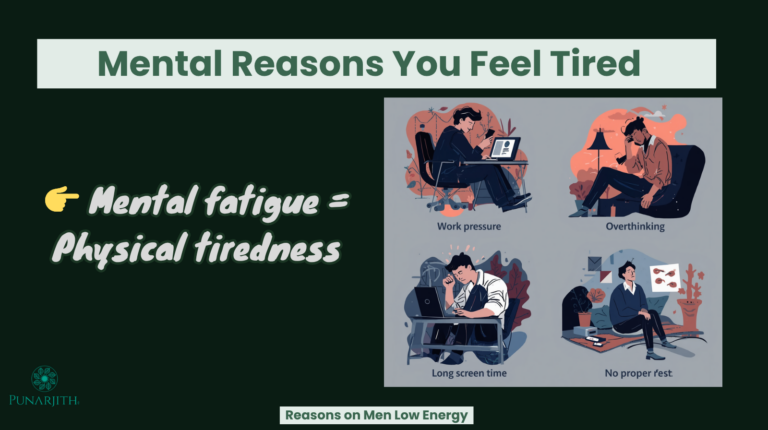
1. The Professional Burn: Work Pressure
Modern work culture often demands a “constant-on” mentality. High-stakes decision-making and the pressure to provide can lead to chronic sympathetic nervous system activation (the “fight or flight” mode).
Decision Fatigue: Making hundreds of small choices daily eventually wears down the prefrontal cortex, leaving you feeling mentally paralyzed by evening.
The Provider Stress: For many men, the internal pressure to achieve financial or professional stability acts as a background “program” that never stops running, slowly draining the battery.
2. The “Open Tabs” Effect: Overthinking and Anxiety
Anxiety isn’t always a panic attack; often, it’s a low-level hum of worry.
Cognitive Overload: Overthinking is like having 50 browser tabs open on a computer—eventually, the whole system slows down.
The Loop: Analyzing past mistakes or worrying about future “what-ifs” consumes massive amounts of glucose (brain fuel), leading to physical lethargy.
3. Digital Drainage: Long Screen Time
It’s not just your eyes that get tired; it’s your central nervous system.
Sensory Overload: Constant notifications and rapid-fire information delivery keep the brain in a state of hyper-arousal.
Blue Light Interference: Excessive screen time—especially after work—disrupts the production of melatonin, ensuring that even when you do sleep, the quality is too poor to “recharge” your mental state.
4. Rest vs. Sleep: The Lack of Proper Recovery
There is a significant difference between sleeping and resting.
Passive vs. Active Rest: Many men “zone out” in front of a TV, which is passive. Active rest—like a hobby, meditation, or a walk—actually helps the brain process the day’s stress.
The Recovery Deficit: Without intentional downtime, the brain never enters the “maintenance mode” required to clear out metabolic waste (adenosine) that builds up during the day.
5. The Chaos Factor: Irregular Daily Routine
The human body thrives on rhythm (circadian and ultradian cycles).
Social Jetlag: Having an erratic schedule—staying up late on weekends and waking up early on weekdays—keeps the body in a constant state of flux.
Decision Chaos: When you don’t have a routine, you have to decide when to eat, work, and exercise. This uses up mental energy that should be reserved for more important tasks.
Understanding the Mind-Body Connection
The Somatic Link: Mental fatigue often manifests as physical symptoms because the brain and the nervous system are inseparable. When your mind is exhausted, it sends signals to the muscles to “slow down” to preserve energy, resulting in heavy limbs, tension headaches, and back pain.